

Keynotes
Finding Rubies in the Dust: how to exploit errors and interference to enhance systems
Julie A. McCann is a Professor of Computer Systems with Imperial College London
and is currently Co-Director of the School of Convergence Science in Space,
Security and Telecoms and Director of the national CHEDDAR communications
research hub. Formerly Vice Dean Research in the Faculty of Engineering, she has
published extensively on decentralized and self-organizing scalable algorithms
and protocols for Wireless/RF Sensor-based systems, Internet of Things, and
Cyber-physical systems. She leads the Adaptive Emergent Systems Engineering
Research (AESE) research group, and between 2015-2022 was the Deputy Director of
PETRAS IoT Cybersecurity Hub, Critical Ecosystems Lead for the Alan Turing
Institute, and Imperial PI on the EPSRC programme grant Science for Sensor
Systems Software. She has a number of international research collaborations
including Singapore NRF funded Eco-Cities (until March 2024 she had a sub-lab in
Singapore with I2R and HDB), between 2012-2017 directed the Intel Collaborative
Research Institute (ICRI) for Sustainable Cities, and NEC Japan on smart
communications technologies, as well as other projects though EU FP7/H2020
programmes. McCann is an elected Member of the Council of Computer Science
Professors and Heads of Computing, and was elected to the membership committee
of the UKCRC, she holds the 2018 UKRI Suffrage Science Award for Computing and
Mathematics, President’s Medal for Research Excellence 2020, and is a Fellow of
the BCS and Chartered Engineer.
Abstract
TBA
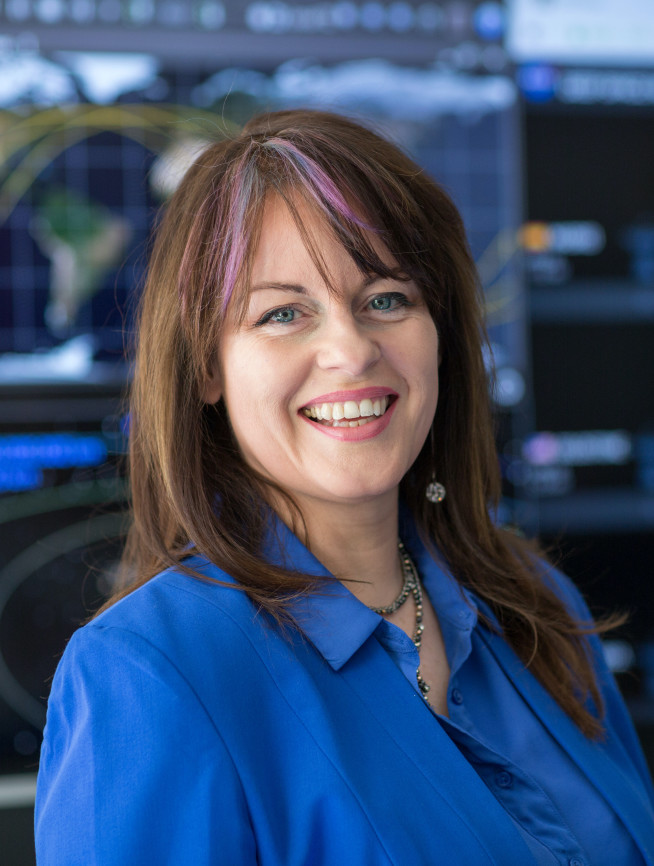
Julie A. McCann
Professor of Computer Systems, Imperial College London, UK
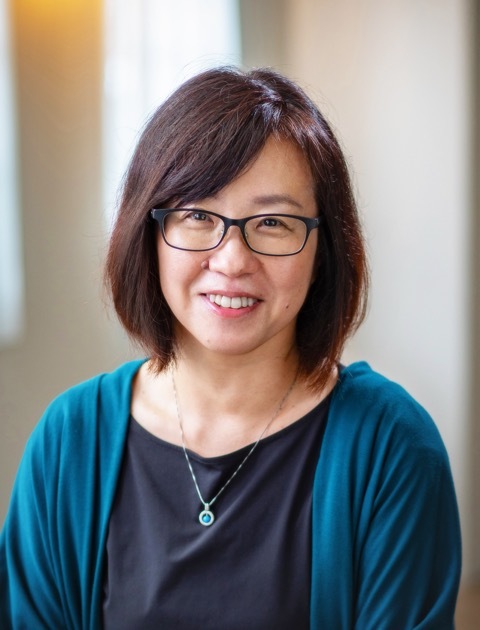
Natsue Yoshimura
Professor of School of Computing and the Institute of Biomedical Engineering, Institute of Science Tokyo, Japan
Bridging Neuroengineering and Ubiquitous Computing: Sensing and Understanding Human Internal States
Natsue Yoshimura is a Professor in the School of Computing and the Institute of Biomedical Engineering at the Institute of Science Tokyo, Japan. She received her M.S. and Ph.D. degrees after approximately nine years in industry.
Her research lies at the intersection of neuroengineering, computational neurophysiology, and human-computer interaction. She investigates how non-invasive neural and physiological signals can reveal human internal states not directly observable from behavior, aiming to develop technologies that enhance human well-being and benefit society and science. Her work focuses on neural representations of perception, movement, learning, and subjective experience, and their application to human-computer interaction, including brain-computer interfaces. Recent topics include auditory perception, motor control and learning, aging and fall risk, sensory processing, and human adaptation.
She currently serves as a Project Manager in Japan’s Moonshot Research and Development Program, Goal 3, leading a project on motion-assist robots that infer human states. She has also led or participated in JST PRESTO, JST FOREST, a Japan–U.S. Collaborative Research in Computational Neuroscience project, and industry collaborations.
She serves as a Senior Program O fficer at the Research Center for Science Systems, Japan Society for the Promotion of Science (JSPS), and as a board member of the Japan Neural Network Society and the Japanese Society for Motor Control. She is also a judge for the NEDO Challenge, Exploring Neurotech New Markets.
Extending Mobile and Ubiquitous Computing into Space: Research Trends and Perspectives from Industry
NewSpace is transforming satellites from specialised standalone spacecraft into networked platforms for computing, communication and sensing. This talk first reviews how lower launch costs, satellite mass production, low Earth orbit constellations and direct-to-device communication have brought space systems closer to terrestrial ICT. It then looks beyond today’s NTN and D2D services toward regenerative payloads, orbital edge computing, integrated sensing and communication, autonomous satellite coordination, and network and mission orchestration, noting what has been demonstrated in orbit and what remains open. As a case study of many satellites cooperating to realize one function, we introduce our research on a large distributed antenna formed by tens of thousands of formation-flying satellites, each about 5 cm across. Finally, from an industry perspective, the talk discusses what advances in networking, distributed computing, autonomy, security, verification and scalable system design are needed from the academic community to realize future computing infrastructures spanning space and ground.
Abstract
TBA
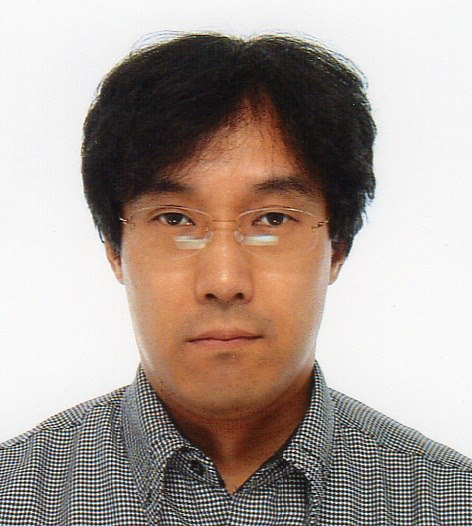
Sumio Morioka
Interstellar Technologies Inc.,
The University of Osaka
